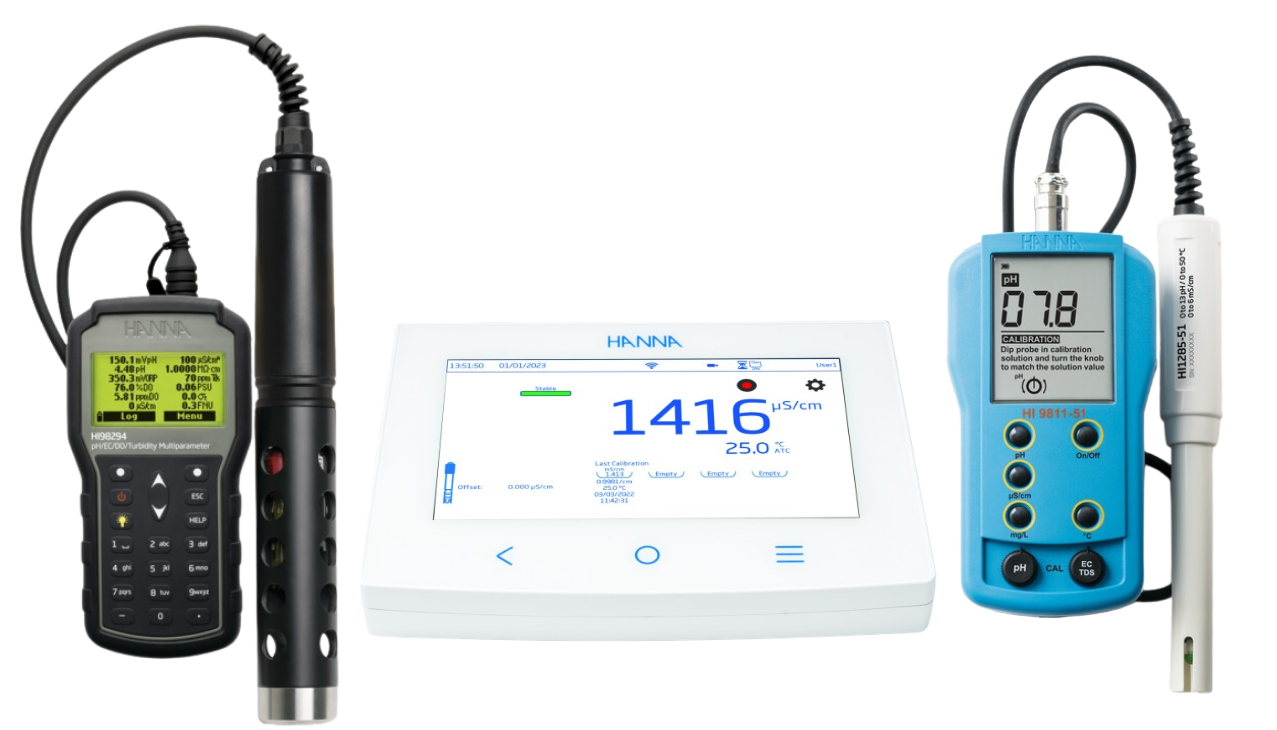
Why More UK Laboratories Are Switching to Multi-Parameter Measurement Systems
Laboratory workloads are becoming increasingly demanding. Whether you're working in environmental testing, water analysis, food and beverage quality control, education, pharmaceuticals, research, or industrial process monitoring, there is constant pressure to deliver accurate results faster whilst maintaining compliance and traceability.
For many laboratories, this raises an important question:
Should we continue using separate instruments for each measurement, or invest in a multi-parameter meter?
If you're currently weighing up the options, you're not alone. Many laboratory managers and technicians find themselves unsure whether a multi-parameter system will genuinely improve efficiency or simply add unnecessary complexity.
In reality, modern multi-parameter meters have evolved significantly and now offer a practical solution for laboratories looking to streamline workflows, improve data management, and future-proof their testing capabilities.
What Is a Multi-Parameter Meter?
A multi-parameter meter is an analytical instrument designed to measure several water quality or chemical parameters from a single platform.
Depending on the model, these parameters can include:
- pH
- Conductivity (EC)
- Total Dissolved Solids (TDS)
- Salinity
- Dissolved Oxygen (DO)
- Oxidation Reduction Potential (ORP)
- Ion Selective Electrode (ISE) measurements
- Temperature
- Turbidity
Rather than purchasing and maintaining multiple standalone instruments, laboratories can consolidate testing through one integrated system.
Modern laboratory-grade instruments are often modular, allowing users to add capabilities as their testing requirements evolve. Hanna Instruments' latest modular benchtop systems are examples of this approach, offering combinations of pH, ORP, ISE, conductivity and dissolved oxygen measurements within a single platform.
The Challenge of Choosing the Right Meter
One of the most common concerns from laboratory buyers is over-specifying or under-specifying their equipment.
A laboratory performing routine pH testing today may suddenly find itself needing dissolved oxygen or conductivity measurements six months later. Purchasing individual instruments each time requirements change can quickly become expensive and difficult to manage.
This is where a multi-parameter system offers a distinct advantage.
Instead of trying to predict every future requirement, laboratories can invest in a platform that grows alongside their applications.
For laboratories operating under strict budgets, this can provide a more strategic long-term investment compared with purchasing multiple standalone devices.
Key Benefits of Multi-Parameter Meters in the Laboratory
1. Reduced Bench Space Requirements
Laboratory space is valuable.
Traditional setups often involve separate pH meters, conductivity meters, dissolved oxygen meters and data logging systems occupying significant bench space.
A multi-parameter meter consolidates these functions into a single workstation, helping laboratories maintain a cleaner, more organised working environment.
For busy laboratories processing high sample volumes, this can make a noticeable difference to daily efficiency.
2. Faster Testing Workflows
When multiple parameters need measuring from the same sample, switching between different instruments can be time-consuming.
Multi-parameter systems reduce this inefficiency by allowing users to perform several measurements through one platform.
The result is:
- Faster sample throughput
- Reduced handling time
- Improved consistency between measurements
- Greater productivity for laboratory staff
For laboratories facing increasing workloads, these time savings can quickly accumulate.
3. Simplified Training
Every instrument comes with its own operating procedures, calibration routines and maintenance requirements.
The more instruments a laboratory owns, the more training is required.
A multi-parameter system allows staff to become familiar with one user interface and one workflow, reducing training demands and helping maintain consistency across teams.
This can be particularly beneficial in university laboratories, teaching facilities and organisations with frequent staff turnover.
4. Improved Data Management and Traceability
Data integrity is increasingly important across UK laboratories.
Many modern multi-parameter meters include:
- Internal data logging
- USB connectivity
- Network connectivity
- User management functions
- Calibration records
- Audit trails
Advanced systems such as Hanna Instruments' modular benchtop range even incorporate Ethernet and Wi-Fi connectivity, helping laboratories improve data accessibility and record keeping.
For laboratories operating under ISO standards or regulated environments, these features can significantly simplify compliance requirements.
5. Lower Overall Equipment Management
Every additional instrument introduces:
- Calibration schedules
- Maintenance requirements
- Service costs
- Validation procedures
- Consumable purchases
Consolidating multiple measurements into one platform can reduce the overall administrative burden associated with laboratory equipment management.
Whilst sensors and probes still require maintenance, there are fewer instruments to track and manage.
6. Future-Proofing Your Laboratory
Perhaps the most compelling reason to consider a multi-parameter meter is flexibility.
Laboratory requirements rarely remain static.
Environmental laboratories may add conductivity monitoring.
Food laboratories may require dissolved oxygen testing.
Research groups may expand into ion-selective electrode analysis.
A modular multi-parameter platform enables laboratories to adapt without replacing entire systems.
This scalability can provide significant value over the lifetime of the instrument.
Which Type of Laboratory Benefits Most?
Multi-parameter meters are particularly valuable for:
Environmental Laboratories
Monitoring water quality often requires multiple measurements from the same sample, making integrated systems highly efficient.
Water Treatment Facilities
Routine testing commonly includes pH, conductivity, dissolved oxygen and ORP measurements.
Food and Beverage Laboratories
Quality control processes frequently depend on several analytical parameters being monitored simultaneously.
Research Institutions
Research projects can evolve rapidly, making modular measurement capabilities particularly attractive.
Educational Laboratories
A single instrument capable of demonstrating multiple analytical techniques can provide excellent value for teaching environments.
Why Hanna Instruments Continues to Attract Attention
When evaluating multi-parameter systems, Hanna Instruments frequently appears on laboratory shortlists.
This is largely due to the company's focus on user-friendly interfaces, modular system design and broad measurement capability.
Recent Hanna Instruments platforms can combine pH, ORP, ISE, conductivity and dissolved oxygen measurements whilst offering advanced connectivity options and data management features.
For laboratories seeking a balance between performance, flexibility and long-term scalability, these systems are worth considering during the selection process.
Questions to Ask Before Purchasing
Before choosing a multi-parameter meter, consider the following:
- Which parameters do we currently measure?
- Which parameters might we need within the next three to five years?
- How important is data logging and traceability?
- Do we require network connectivity?
- How many users will operate the instrument?
- Are we working under quality standards or accreditation requirements?
- Would a modular platform provide better long-term value?
Answering these questions will help identify whether a simple multi-parameter meter or a more advanced modular system is the best fit.
Final Thoughts
For many UK laboratories, a multi-parameter meter is no longer simply a convenience—it's becoming an essential tool for improving efficiency, reducing equipment complexity and supporting future growth.
By combining multiple analytical measurements into one platform, laboratories can save space, simplify workflows, improve data management and adapt more easily to changing testing requirements.
If your laboratory is currently operating several standalone instruments, now may be the ideal time to evaluate whether a modern multi-parameter system could deliver a smarter, more efficient approach to routine testing.
The right choice today could help your laboratory work faster, manage data more effectively and remain ready for whatever analytical challenges come next.
You can see our full range of Multi-Parameter Meters HERE.
