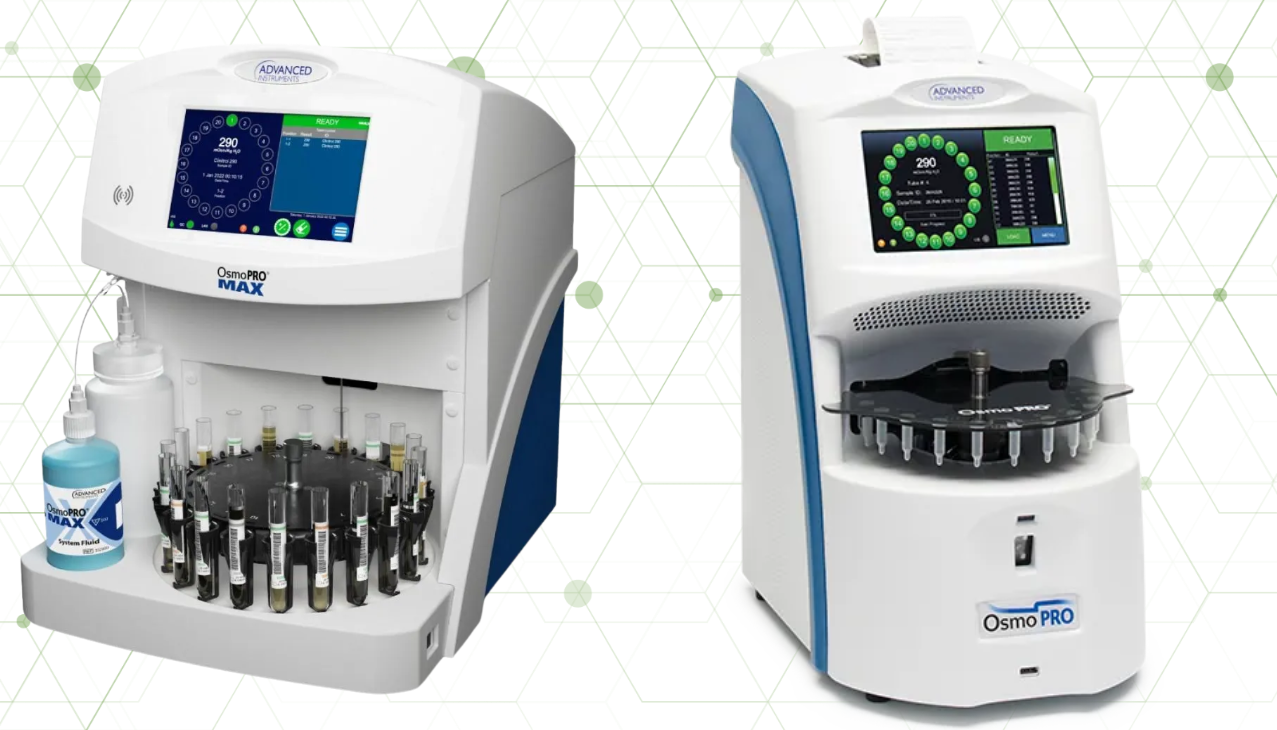
What Is an Osmometer? A Guide to Osmometer Applications in the Laboratory
Osmometers are important analytical instruments used in laboratories to measure the concentration of dissolved particles in a solution. From clinical diagnostics and pharmaceutical quality control to biotechnology and food testing, laboratory osmometers help researchers and laboratory professionals assess sample composition, monitor processes and maintain product quality.
Understanding how osmometers are used can help laboratories choose the right equipment for their analytical requirements, sample types and testing workflows.
What Is an Osmometer?
An osmometer is a laboratory instrument that measures the osmolality of a solution. Osmolality describes the concentration of dissolved particles, known as solutes, in a kilogram of solvent. Results are commonly expressed in milliosmoles per kilogram (mOsm/kg).
Osmolality is important because dissolved particles influence the movement of water across semipermeable membranes, affecting the behaviour of biological fluids, cell culture media and pharmaceutical formulations.
By measuring osmolality, laboratories can assess the concentration of a solution and identify changes that may affect its performance, stability or suitability for a particular application.
There are several types of osmometer, with freezing point osmometers widely used in clinical laboratories, pharmaceutical testing and quality control. These instruments measure how dissolved particles lower the freezing point of a solution to determine its osmolality. Vapour pressure osmometers use changes in vapour pressure to determine the concentration of osmotically active particles.
The most suitable laboratory osmometer will depend on the samples being tested, the required measurement range, sample volume and the level of accuracy needed.
How Are Osmometers Used in the Laboratory?
Osmometers have applications across a variety of laboratory environments. Their ability to measure the concentration of dissolved particles makes them valuable for analysing biological samples, checking pharmaceutical formulations and supporting research and development.
1. Clinical and Diagnostic Laboratories
<escape> </escape>Osmometers play an important role in clinical chemistry laboratories, where measuring the osmolality of biological fluids can support the investigation and monitoring of a range of medical conditions.
Clinical laboratories commonly use osmometers to analyse samples such as serum, plasma and urine. These measurements can help healthcare professionals assess the body's fluid and electrolyte balance and investigate conditions associated with abnormal water regulation.
Common applications include:
- Kidney function and hydration assessment: Urine and serum osmolality measurements can help investigate the body's ability to regulate water balance and concentrate urine.
- Electrolyte imbalance investigations: Serum osmolality can support the assessment of patients with abnormal electrolyte levels, including low blood sodium.
- Investigation of suspected poisoning: Osmolality testing can contribute to the assessment of certain toxic alcohol ingestions when interpreted alongside other clinical investigations.
- Monitoring patient treatment: Serial measurements can help clinicians assess changes in fluid balance and response to treatment where clinically indicated.
In busy diagnostic laboratories, an automated osmometer can help streamline routine osmolality testing, with small sample requirements and rapid analysis supporting efficient workflows.
2. Pharmaceutical Quality Control and Drug Development
In pharmaceutical laboratories, accurate osmolality measurement is important for developing, testing and manufacturing formulations with consistent properties.
The concentration of dissolved particles can influence the suitability of a formulation for its intended use, particularly when developing products designed for administration to the body. Osmolality testing is therefore used as part of formulation development and quality control, where appropriate to the product and its specifications.
Laboratory osmometers can support pharmaceutical applications such as:
- Injectable medicines: Assessing formulation osmolality to help determine suitability against the product's defined requirements.
- Parenteral solutions and infusions: Checking osmolality as part of formulation development and quality testing.
- Drug formulation development: Comparing formulations to understand how different ingredients and concentrations affect osmolality.
- Batch-to-batch consistency: Monitoring osmolality against established acceptance criteria as part of a wider quality control programme.
- Stability studies: Investigating changes in formulation properties during product development and storage.
For pharmaceutical laboratories, choosing an osmometer with suitable accuracy, measurement range, repeatability and data handling capabilities can help support reliable testing. Laboratories working in regulated environments should also consider instrument qualification, calibration, documentation and applicable data integrity requirements.
3. Biotechnology and Cell Culture Laboratories
Osmometers are also valuable in biotechnology laboratories, where maintaining suitable conditions for cells and biological materials is essential.
The osmolality of cell culture media influences the movement of water into and out of cells. If the concentration of dissolved particles changes significantly, it can affect cell volume, viability, growth and productivity.
Osmolality measurement can therefore support the preparation and monitoring of culture media, buffers and other aqueous solutions used in biological research and bioprocessing.
Typical applications include:
- Cell culture media preparation: Checking osmolality to help ensure media meet the requirements of a particular cell line or experimental protocol.
- Bioprocess development: Monitoring osmolality during process development to understand changes in the culture environment.
- Biopharmaceutical production: Supporting the control of process conditions during the development and manufacture of biological products.
- Buffer preparation: Verifying the osmolality of buffers and other solutions used in laboratory procedures.
- Research and development: Investigating how changes in solution concentration affect cellular responses and experimental outcomes.
For laboratories working with sensitive cell lines or developing bioprocesses, an osmometer can provide useful information alongside other measurements, such as pH, temperature and nutrient concentration.
4. Food and Beverage Testing Laboratories
Food testing laboratories can use osmometers to measure the concentration of dissolved particles in suitable aqueous samples. These measurements can support product development, formulation testing and quality control.
Osmolality may be relevant when investigating products where the concentration of sugars, salts and other dissolved ingredients influences product properties.
Applications can include:
- Beverage formulation: Comparing the osmolality of drinks and other liquid formulations during product development.
- Dairy product analysis: Assessing the osmolality of suitable liquid dairy samples and formulations.
- Food research and development: Investigating how changes in ingredient concentrations affect the properties of aqueous products.
- Quality control: Comparing results against established specifications to help maintain consistency between batches.
The suitability of an osmometer for food testing depends on the sample composition and the instrument's measurement principle. Laboratories should check that the selected instrument can accommodate their samples, particularly where volatile ingredients, high viscosity or complex matrices may affect measurement performance.
5. Research, Biological Sciences and Environmental Analysis
Beyond routine diagnostic and industrial testing, osmometers can support a broad range of research applications involving the concentration and behaviour of solutions.
In biological research, osmolality measurements can help scientists investigate osmotic regulation, cellular responses and the effects of changes in the surrounding environment. Plant science laboratories, for example, may use suitable osmometry methods to investigate plant fluids and water relations.
Other potential applications include:
- Physiology research: Investigating osmotic balance and the movement of water across biological membranes.
- Plant science: Studying the concentration of plant fluids in research into water availability and plant responses to environmental conditions.
- Laboratory solution preparation: Checking the osmolality of aqueous solutions used in experiments.
- Environmental research: Analysing suitable water-based samples as part of studies where osmolality is a relevant measurement.
In these settings, an osmometer can provide an additional analytical measurement to complement other laboratory techniques. The appropriate instrument and sample preparation method will depend on the research objectives and the composition of the sample.
Choosing the Right Osmometer for Your Laboratory
When purchasing an osmometer, it is important to consider more than the instrument's measurement principle. The right choice should reflect your laboratory's routine workload, sample types and testing requirements.
Consider the following factors when comparing laboratory osmometers:
- Measurement principle: Freezing point and vapour pressure osmometers have different capabilities. Freezing point models are widely used for clinical and pharmaceutical osmolality testing, while vapour pressure instruments may be suitable for particular applications involving volatile-free samples.
- Sample volume: If you work with limited or valuable samples, look for an osmometer with a suitably low minimum sample volume.
- Measurement range: Check that the instrument covers the expected osmolality range of your samples.
- Throughput and speed: Laboratories processing large numbers of samples may benefit from automated operation and short measurement times.
- Accuracy and repeatability: Consider the performance specifications required for your application and the instrument's ability to deliver consistent results.
- Calibration and quality control: Check the availability of suitable calibration standards, control solutions and maintenance support.
- Data management: Digital displays, result storage, connectivity and laboratory information system compatibility may be important for efficient workflows and traceability.
- Sample compatibility: Confirm that the instrument can measure your sample types reliably and that any preparation requirements can be accommodated.
It is also worth considering the ongoing cost of consumables, servicing and calibration when assessing the total cost of ownership.
Find the Right Laboratory Osmometer
Whether you work in clinical diagnostics, pharmaceutical manufacturing, biotechnology or research and development, an osmometer can provide valuable information about the concentration of dissolved particles in your samples.
By helping laboratories monitor osmolality, compare formulations and investigate changes in solution properties, these instruments support a wide range of analytical and quality control activities.
When selecting a laboratory osmometer, consider your sample types, testing requirements and expected throughput to identify an instrument that suits your application.
Explore the range of laboratory osmometers available from WolfLabs to find equipment for your laboratory's osmolality testing requirements.
