Reproducibility in Cell and Gene Therapy: Why Environmental Control is Becoming a Critical Quality Attribute
As Advanced Therapies Move Towards Commercialisation, Reproducibility Has Never Been More Important
The rapid growth of Cell and Gene Therapy (CGT) is transforming modern medicine. From CAR-T therapies and stem cell treatments to regenerative medicine and gene-modified cell products, the industry is advancing at an unprecedented pace. Yet alongside these scientific breakthroughs comes a challenge that every research scientist, process development team and GMP manufacturing facility must overcome: reproducibility.
In cell and gene therapy manufacturing, reproducibility is far more than a scientific objective. It is a regulatory expectation, a quality requirement and ultimately a patient safety imperative.
While attention is often focused on media formulations, viral vectors, raw materials and analytical methods, one critical factor is frequently overlooked: the consistency of the cell culture environment itself.
The Hidden Impact of Environmental Variability
Many advanced therapy developers experience a familiar challenge. A process performs well during early-stage research, yet results become increasingly difficult to replicate during scale-up, technology transfer or GMP implementation.
Even minor fluctuations in environmental conditions can influence cell behaviour, including:
- Cell viability
- Cell expansion rates
- Differentiation efficiency
- Gene expression profiles
- Metabolic activity
- Product consistency
For sensitive cell types such as primary cells, stem cells, induced pluripotent stem cells (iPSCs), organoids and engineered immune cells, environmental stability becomes particularly important.
Small deviations in temperature, CO₂ concentration, oxygen levels or humidity can introduce variability that affects experimental outcomes and manufacturing consistency. In advanced therapies, where every batch may represent treatment for a specific patient, this variability can have significant consequences.

Reproducibility Starts with Stable Cell Culture Conditions
Achieving reproducible results requires maintaining physiological conditions throughout the entire culture process.
Modern CO₂ incubators are no longer simple laboratory devices; they have become critical process tools within regulated environments.
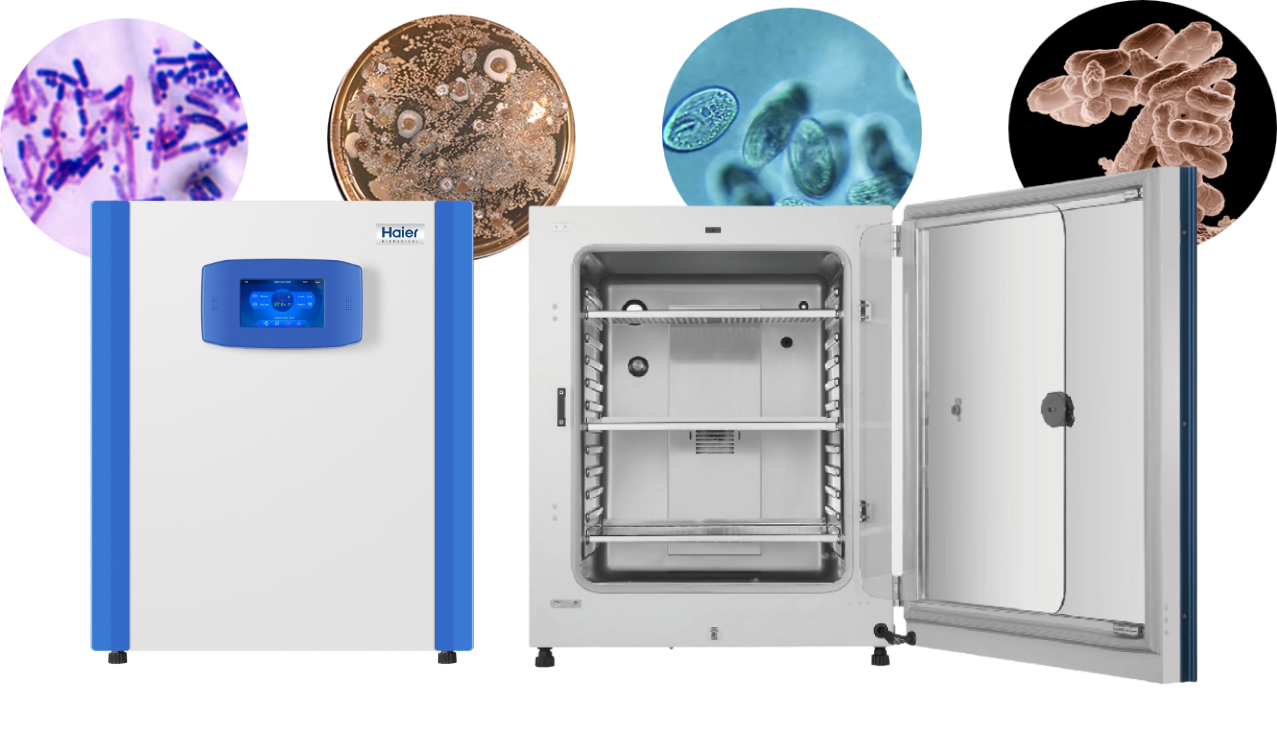
For example, the Haier Biomedical HCP-80, HCP-168 and HCP-258 CO₂ incubators have been designed specifically to address three key pillars of successful cell culture:
- Contamination Control
- Environmental Stability
- Workflow Reliability
Together, these factors support reproducible cell culture performance across both research and GMP manufacturing environments.
Contamination Control: Protecting High-Value Cell Cultures
In Cell and Gene Therapy facilities, contamination events can be devastating. Beyond the direct financial impact, contamination can compromise months of development work and delay critical clinical programmes.
Modern incubator design therefore plays a significant role in contamination prevention.
Features increasingly sought by CGT manufacturers include:
- Validated high-temperature sterilisation cycles
- Seamless stainless-steel chamber construction
- HEPA filtration systems
- Reduced water reservoir contamination risks
- Cleanroom-compatible materials and designs
The Haier Biomedical HCP Series incorporates a validated 180°C dry heat sterilisation cycle, designed to achieve a high sterility assurance level while supporting GMP cleaning and decontamination strategies. The optional HEPA filtration system provides ISO Class 5 air quality within the chamber, helping reduce particulate and microbial contamination risks in demanding cell therapy applications.
For organisations operating within GMP cleanrooms, these contamination-control measures help establish a robust foundation for process reproducibility.

Environmental Stability and Consistent Cell Performance
Perhaps the most important factor influencing reproducibility is environmental consistency.
Every door opening introduces potential disturbances to:
- Temperature
- Carbon dioxide concentration
- Oxygen concentration
- Relative humidity
If recovery is slow or uneven, cells may experience stress that impacts growth, viability and experimental outcomes.
Advanced incubator systems are increasingly designed to minimise these fluctuations through:
- Rapid temperature recovery
- Fast CO₂ stabilisation
- Uniform airflow management
- Precise oxygen control
- High-performance sensing technologies
The Haier Biomedical HCP Series demonstrates this approach through rapid recovery performance and chamber uniformity designed to maintain stable conditions for sensitive cell cultures. Independent validation has demonstrated temperature and CO₂ recovery in under four minutes following door opening events, alongside temperature uniformity of ±0.3°C throughout the chamber.
For cell and gene therapy developers, this level of environmental control can significantly reduce variability between operators, experiments and manufacturing batches.
The Growing Importance of Hypoxic Cell Culture
Many advanced cell therapy processes require culture conditions that more closely mimic physiological environments.
Hypoxic culture is becoming increasingly important in:
- Stem cell expansion
- Regenerative medicine
- Cancer research
- Exosome production
- Immune cell manufacturing
Maintaining stable oxygen concentrations under hypoxic conditions can be particularly challenging.
Modern tri-gas incubator platforms, such as those available within the Haier Biomedical range, offer precise oxygen control across both hypoxic and hyperoxic environments, helping researchers and manufacturers maintain reproducible culture conditions throughout critical process stages.

Cleanroom Compatibility: A GMP Requirement
As promising therapies progress from research laboratories into GMP production facilities, equipment selection criteria inevitably change.
The focus shifts from simply supporting cell growth to supporting:
- GMP compliance
- Data integrity
- Cleanroom compatibility
- Audit readiness
- Process standardisation
This is particularly relevant for organisations establishing commercial-scale Cell and Gene Therapy manufacturing facilities.
Equipment designed specifically for cleanroom operation can help reduce contamination risk while simplifying facility qualification and validation activities.
The Haier Biomedical HCP Series includes particle emission-tested designs verified for ISO Class 5 compatibility during both normal operation and sterilisation cycles. Additional GMP-focused features include user management controls, historical event traceability, data export functionality and remote monitoring capabilities.
These capabilities align closely with the increasing regulatory expectations surrounding advanced therapy manufacturing.
Reproducibility as a Competitive Advantage
As the Cell and Gene Therapy industry matures, reproducibility is becoming a key differentiator between successful and unsuccessful programmes.
The ability to generate consistent, reliable and scalable results affects:
- Research productivity
- Technology transfer success
- GMP readiness
- Regulatory submissions
- Commercial manufacturing performance
Organisations that invest in robust environmental control and cleanroom-ready infrastructure early in development are often better positioned to accelerate clinical translation and commercialisation.
Looking Ahead
The future of Cell and Gene Therapy depends on the industry's ability to consistently manufacture safe, effective and high-quality products at scale.
While breakthroughs in cell engineering and genetic modification continue to capture headlines, reproducibility remains one of the most important challenges facing the sector.
Creating reproducible cell culture environments requires more than good laboratory practice. It demands equipment specifically engineered to deliver contamination control, environmental stability and operational consistency.
As advanced therapies move from the research bench to GMP manufacturing and commercial production, technologies such as the Haier Biomedical HCP-80, HCP-168 and HCP-258 CO₂ incubators demonstrate how incubator design can play a pivotal role in supporting reproducible science, robust manufacturing processes and ultimately better patient outcomes.

You can check out our full range of CO2 incubators HERE.
