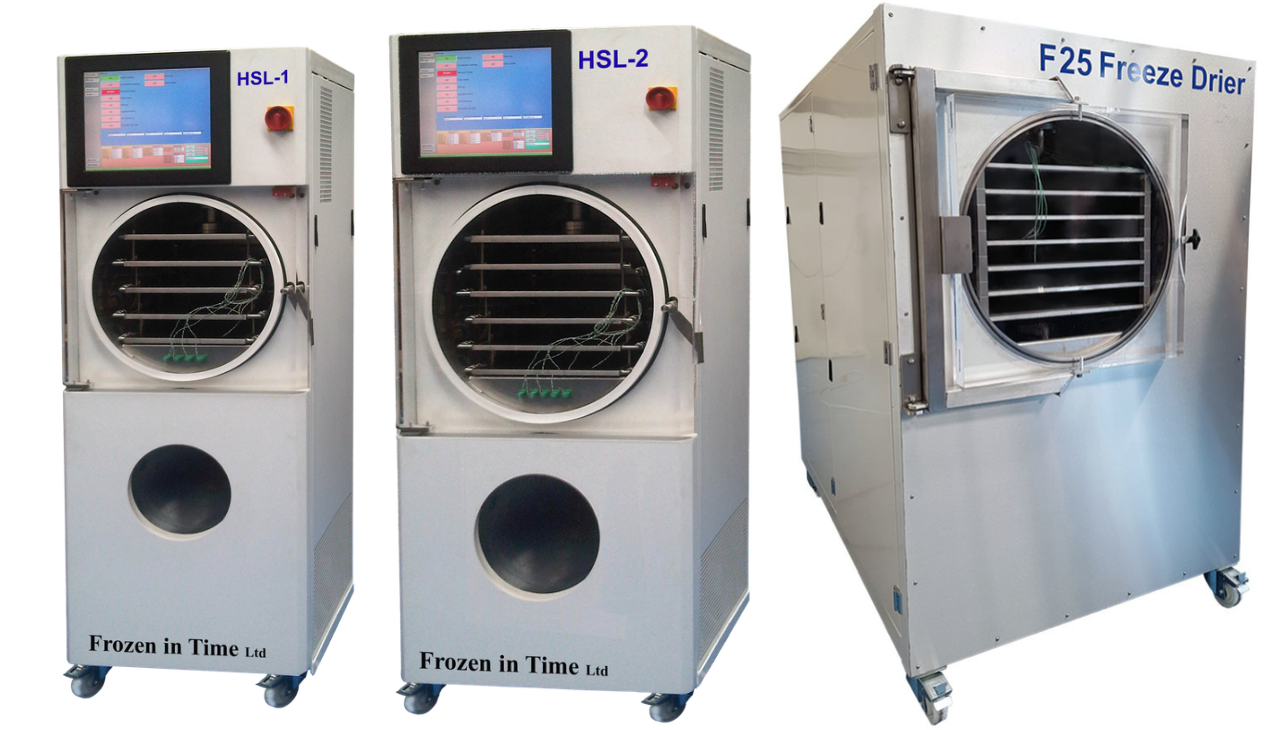
Freeze Dryers: A Practical Guide for Laboratory Users
Freeze drying, also known as lyophilisation or lyophilization, is a widely used technique for removing water from sensitive materials while helping to maintain their stability and structure. Laboratory freeze dryers are used across a variety of research applications, including biotechnology, pharmaceutical research, microbiology and the preservation of biological samples.
Whether you already use a freeze dryer or are considering purchasing one, understanding how the process works and what to look for when selecting equipment can help you get the most from your laboratory setup.
What is freeze drying?
Freeze drying is a dehydration process in which a sample is frozen before water is removed under vacuum. Rather than passing through a liquid phase, the frozen water sublimes, changing directly from a solid to a vapour.
This allows water to be removed at relatively low temperatures, making freeze drying particularly useful for temperature-sensitive samples and biological materials that may be damaged by conventional drying methods.
The freeze-drying process typically consists of three stages:
1. Freezing
The sample is cooled until the water within it freezes. The freezing conditions can influence the ice crystal structure and, consequently, how effectively moisture can be removed during the drying stages.
2. Primary drying
The frozen sample is placed under vacuum and carefully supplied with heat. The ice then sublimes directly into water vapour, which is captured by the freeze dryer's condenser.
This is usually the longest stage of the process and requires careful control of temperature and vacuum pressure to prevent damage to the sample.
3. Secondary drying
Once most of the ice has been removed, secondary drying removes remaining or bound moisture. The temperature is typically increased during this stage to achieve the desired final moisture content.
The result is a dry, stable material that can often be stored for extended periods and reconstituted when required.
Why use a freeze dryer in the laboratory?
Freeze drying can provide several benefits for laboratory users:
- Sample preservation: Removing water can help improve the stability of sensitive materials.
- Long-term storage: Freeze-dried samples can often be stored for longer periods than their liquid counterparts.
- Protection of sensitive materials: Low-temperature processing can be beneficial for heat-sensitive biological and pharmaceutical materials.
- Easy reconstitution: Many freeze-dried products can be returned to their original or usable form by adding an appropriate solvent.
- Simplified transportation: Dry samples can be easier to package and transport than liquid materials.
Applications can include biological sample preservation, proteins and enzymes, pharmaceutical formulations, vaccines, diagnostics, reagents and biotechnology research.
Choosing a laboratory freeze dryer
If you are looking to purchase a laboratory freeze dryer, it is important to consider your application rather than simply selecting a system based on its size or capacity.
Sample volume and capacity
Consider how much material you need to process in a typical cycle. A compact benchtop freeze dryer may be suitable for smaller research applications, while laboratories processing larger sample volumes may require increased shelf or chamber capacity.
Temperature range
The required temperature range will depend on the materials being processed and the freeze-drying cycle you intend to use. Consider both the freezing temperature and the temperatures required during primary and secondary drying.
Vacuum performance
Reliable vacuum control is essential for effective sublimation. When comparing laboratory freeze dryers, consider the achievable vacuum level, vacuum pump and the system's ability to maintain stable pressure throughout the drying cycle.
Process control and monitoring
For laboratories requiring repeatable results, programmable cycles and monitoring can be particularly valuable. Depending on the model, systems may provide control and monitoring of parameters such as shelf temperature, condenser temperature and chamber pressure.
Accessories
The freeze dryer is only one part of the overall system. Depending on your application, you may also require vacuum pumps, manifolds, drying chambers, shelves, flasks, vial adapters or stoppering systems.
Getting the most from your existing freeze dryer
If you already have a freeze dryer, there are several ways to improve the consistency of your results.
Develop and document your freeze-drying cycles so that successful temperature, pressure and timing parameters can be reproduced by different users.
Avoid overloading the system, as excessive loading can affect heat and mass transfer and lead to uneven drying.
Monitor product temperature where possible. The shelf temperature does not necessarily represent the actual temperature of the sample, so product temperature measurements can provide useful information during cycle development.
Finally, maintain your freeze dryer and vacuum pump regularly in accordance with the manufacturer's recommendations. Good maintenance helps ensure reliable performance and minimise unexpected downtime.
Find the right freeze dryer for your laboratory
For laboratories working with temperature-sensitive materials, biological samples or formulations requiring long-term stability, a laboratory freeze dryer can be an invaluable piece of equipment.
When selecting a system, consider your sample volume, temperature requirements, vacuum performance, condenser capacity and the level of process control you need. Choosing equipment around your specific application will help ensure that your freeze dryer is capable of delivering reliable and repeatable results.
Whether you are investing in your first laboratory lyophiliser, replacing an existing system or looking to improve your current freeze-drying process, understanding your application and equipment requirements is the first step towards successful freeze drying.
You can see our full range of Freeze Dryers HERE.
