Case Study: Developing a Liquid Biopsy Test to Improve Mesothelioma Diagnosis
Case Study: Developing a Liquid Biopsy Test to Improve Mesothelioma Diagnosis
Customer: Associate Professor Antonia Pritchard and PhD Student Connie MacKinnon, University of the Highlands and Islands (UHI)
Background
Mesothelioma is a rare but aggressive form of cancer that primarily affects the lining of the lungs, known as the pleura. The majority of pleural mesothelioma cases are caused by exposure to asbestos, often occurring many years before diagnosis.
Patients with mesothelioma frequently experience a build-up of fluid, known as a pleural effusion, around the affected lung. This fluid can make breathing difficult and is routinely drained as part of clinical care.

Research Focus
At the University of the Highlands and Islands (UHI), Associate Professor Antonia Pritchard and PhD student Connie MacKinnon are leading a project to develop a liquid biopsy test that could improve the diagnostic pathway for mesothelioma and potentially other lung-related cancers.
Their study investigates whether tumour-derived DNA shed into pleural effusion fluid can be detected and analysed to accurately identify the cancer type present. This approach could reduce the need for more invasive biopsy procedures and enable faster, more precise diagnoses.
The project is a collaboration between UHI, Lung and Asthma UK, NHS Highland, and NHS Bristol North.
Laboratory Methods and Equipment
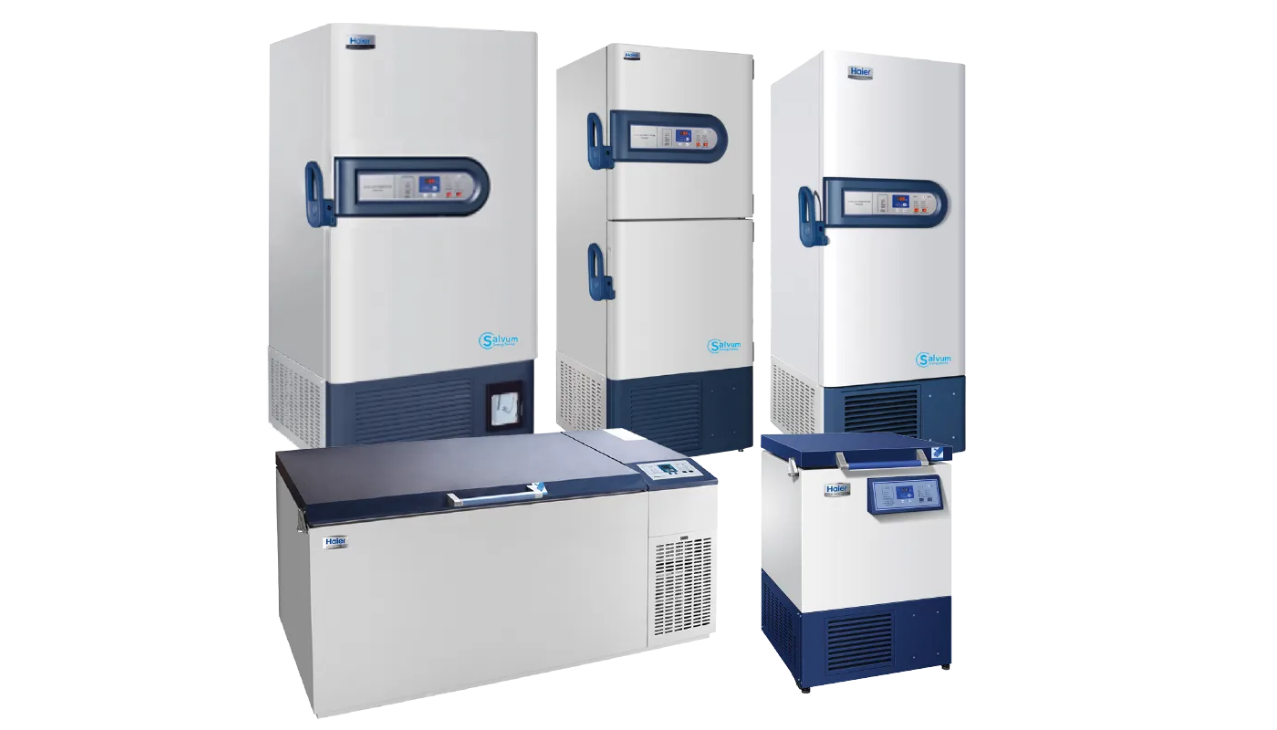
Pleural effusion samples can be collected in large volumes and must be stored at ultra-low temperatures to preserve DNA integrity for analysis. To achieve this, the research team use the Haier ULT range of freezers, supplied by WolfLabs, which provide reliable long-term storage at -80°C.
These ultra-low temperature freezers ensure sample stability and traceability, supporting critical molecular analysis in cancer diagnostics research.
Research Impact
By developing a non-invasive liquid biopsy test, this project aims to transform how mesothelioma and other lung cancers are diagnosed. Earlier and more accurate detection could significantly improve patient outcomes and treatment planning.

If you are looking to purchase an Ultra Low Temperature freezer you can check out our range HERE.
