❄️ Laboratory Cryostats Buyers Guide
Laboratory cryostats are essential instruments in histology, pathology, and biomedical research, enabling the rapid preparation of frozen tissue sections for microscopic analysis. Commonly used in clinical laboratories and research facilities, cryostat microtomes maintain sub-zero temperatures to preserve tissue integrity during sectioning. Choosing the right laboratory cryostat is crucial for achieving high-quality sections, maintaining workflow efficiency, and ensuring operator safety.
🔍 Key Considerations When Selecting a Laboratory Cryostat
1. Type of Cryostat Microtome
Laboratory cryostats are typically defined by their design and intended application:
- Manual cryostats – Offer precise control and are suitable for routine histology and pathology work.
- Semi-automated cryostats – Combine manual control with motorised assistance for improved consistency and reduced operator fatigue.
- Fully automated cryostats – Designed for high-throughput laboratories requiring consistent sectioning and programmable operation.
Selecting the right type depends on workload, user experience, and required throughput.
2. Temperature Range and Stability
Cryostats operate at low temperatures, typically between -10°C and -35°C. Key considerations include:
- Stable and uniform chamber temperature
- Rapid cooling and recovery times
- Adjustable temperature settings for different tissue types
Consistent temperature control is essential for producing high-quality frozen sections.
3. Sectioning Performance
The quality of tissue sections depends on the microtome’s precision and ease of use. Look for:
- Smooth and consistent section thickness adjustment (e.g. 1–60 µm)
- Vibration-free operation
- Reliable specimen feed and blade control
High-performance sectioning improves diagnostic accuracy and reproducibility.
4. Ergonomics and User Comfort
Cryostat operation often involves prolonged use, so ergonomic design is important:
- Adjustable handwheels and controls
- Comfortable working height and access
- Low operating noise and vibration
User-friendly designs can reduce fatigue and improve productivity.
5. Decontamination and Hygiene
Maintaining a clean cryostat chamber is essential in histology and clinical environments. Consider:
- Easy-to-clean interior surfaces
- UV sterilisation or disinfection systems
- Removable components for routine cleaning
Effective decontamination helps prevent cross-contamination between samples.
6. Safety Features
Modern laboratory cryostats include safety features to protect users:
- Blade guards and anti-roll devices
- Emergency stop controls
- Lockable handwheels
- Frost-free or anti-ice systems
These features are particularly important in busy clinical laboratories.
7. Control Systems and Connectivity
Digital interfaces and programmable controls can improve usability and compliance:
- Touchscreen or digital displays
- Programmable sectioning settings
- Temperature monitoring and alarms
Some models also support data logging for quality assurance in regulated environments.
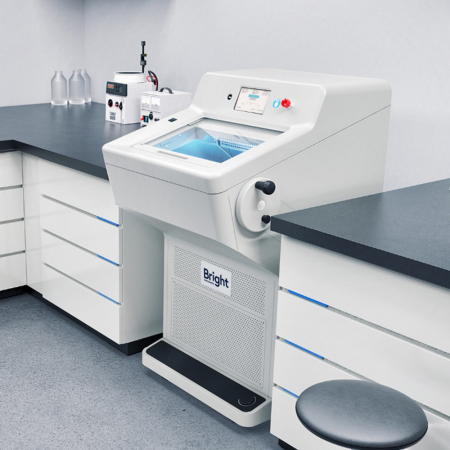
🛠 Example: Bright Instruments Laboratory Cryostats
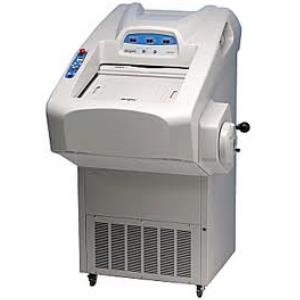
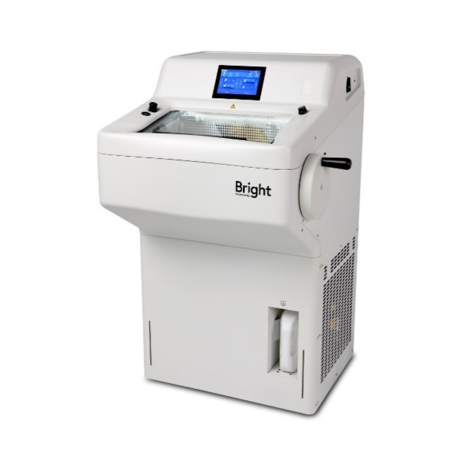
Bright Instruments is a UK-based manufacturer specialising in histology and pathology equipment, offering a range of laboratory cryostats designed for precision, reliability, and ease of use. Examples include:
- Bright Instruments 2212 Starlet Cryostat – A compact and user-friendly cryostat microtome, suitable for routine histology and clinical laboratories.
- Bright Instruments OTF7000 Cryostat – Designed for laboratories requiring enhanced sectioning control and ergonomic operation.
- Bright Instruments OTF7000A Cryostat – A fully automated model offering advanced features for high-throughput environments and demanding applications.
These models demonstrate the range of configurations available within modern laboratory cryostats, from compact systems to advanced high-performance units.
The OTF7000 is particularly well‑suited for laboratories undertaking:
- High‑precision neurological and brain tissue sectioning
- Spatial transcriptomics, where section quality underpins data reliability
- Mixed‑use research labs requiring flexibility across tissue types
- Clinical frozen section workflows requiring repeatability and temperature stability
At WolfLabs, we work closely with laboratories across the UK to help specify cryostats that match real‑world applications. One of the most versatile and widely adopted systems we supply is the Bright Instruments OTF7000 Cryostat.
Laboratories choosing the OTF7000 benefit from:
- Proven cryostat design lineage and quality
- Robust construction for long service life
- Ergonomic design and simple to use
- Simple to clean and maintain
- Ongoing parts availability
- UK‑based technical expertise
- Manufacturer led installation, training and aftersales support via Bright Instruments and Wolf Labs
💡 Quick Buying Tips
- Choose the appropriate level of automation based on workload and user requirements.
- Ensure stable temperature control for consistent frozen sectioning.
- Prioritise ergonomic design for regular or prolonged use.
- Look for easy-to-clean surfaces and effective decontamination features.
- Consider safety features and compliance requirements for clinical environments.
🤔 Need Help?
If you are unsure which cryostat best suits your laboratory application, please consult one of our sales team who will be happy to talk through your requirements. You can find best contact details at https://www.wolflabs.co.uk/contact-us
Product Category: Cryostats
Manufacturer: Bright Instrument Company